The AI Con

I’ve just finished reading the excellent book “The AI Con” by Emily M Bender and Alex Hanna. I was made aware of the book when David Marr interviewed Emily on the Late Night Live radio show on 3 July 2025. The book eloquently and powerfully, with much considered insight, and with doses of humour, exposes the vacuous and dangerous hype of AI promoters.

The book analyses many egregious claims, and one that particularly resonated with me is the way big tech positions AI as the authoritative information source … you ask a question and you get back the answer. Bender and Hanna describe this as the fantasy of “frictionless” access. (I have edited the text below slightly so that it reads more fluently as a stand-alone quote.)

Many of the proposed use cases of Large Language Models (LLMs) are as information access systems, often as a direct replacement for search engines. This uses case trades on a long standing fantasy of making information access “frictionless”: you type in your question and you get the answer. But text synthesis machines are a terrible match for this use case, on two levels. 1. They are inherently unreliable and inclined to make s**t up. 2. Friction in information access is not only beneficial, but critically important.

“The AI COn”, Emily M BEnder and Alex Hanna, 2025. paGE 171.

The point here is that learning is not the simplistic “ask a question, get an answer” model that AI chatbots espouse. Learning involves asking questions, getting multiple answers, evaluating the answers, comparing and contrasting the answers, rating the authority of the answers, identifying gaps in the answers, refining our understanding so that we can ask follow-up questions. AI systems in their mode of presenting “the answer” devalues, demotes, and dissuades the very essential human components required for authentic information enquiry – analysis, comparison, evaluation, reflection etc.

Take for example Google’s “AI Overview” that they have unhelpfully foisted upon us all with no way to disable. Recently I had an occasion where my laptop rebooted overnight after a Windows Update and I lost the set of web pages open in my browser while doing ongoing research. No big deal, but just a bit annoying. Let’s ask Google “How to disable automatic restart in Windows 10”.

The AI Overview is then confidently presented as the authoritative answer in 4 ways …

  1. Positioned at the top of the page
  2. With an icon
  3. In large font
  4. With the instructions highlighted

The answer in the AI Overview is a correct answer, but it is not the answer to the question I was wanting answered. The AI Overview answer provided instructions on how to prevent an automatic restart after a system failure, whereas I was wanting to know about preventing an automatic restart after a Windows Update. The list of conventional Google search results quickly reveals (by the use of human intelligence) that my question covered a number of scenarios and that I need to refine my question. The AI Overview taking up considerable space at the top of the page was a prominent impediment to getting to the actual information I was seeking.

Clearly AI Overview performs badly when presented with questions that are ambiguous, or where there are multiple legitimate answers. But even for questions where there is no ambiguity, AI Overview’s results are egregiously bad. Take the example of postcodes used in mailing addresses. In Australia each 4 digit postcode is associated with one or more suburb/town names. There is a canonical and unambiguous correlation of postcodes to suburb/town names maintained by Australia Post. How does AI Overview fare in this space? Let’s try “What is the postcode for Lambton?”

Full marks to the system for using location information to know that I am asking about “Lambton, NSW, Australia” and not “Lambton, Quebec, Canada”, and the answer of 2299 is correct, and the comment that “this also applies to North Lambton” is also correct. But the answer omits the information that 2299 is also the postcode for Jesmond. So while the AI Overview answer is correct, it only provides two-thirds of the relevant information about postcode 2299 while presenting itself as the authoritative answer.

It gets worse if we pose the question the other way round and ask “What suburb has postcode 2299?”.

In this case the answer of Lambton and North Lambton is correct, but New Lambton is incorrect! (It’s postcode is 2305)

So in the three examples preceding, how has Google AI Overview fared?

  1. It provided a correct answer, but not to the question I was seeking an answer for.
  2. It provided a correct but misleadingly incomplete answer.
  3. It provided an incorrect answer.

Interestingly I tried the postcode queries on other devices and browsers, and the answers returned were not always the same, and sometimes the answer was correct. But regardless of whether the answer was correct, partially correct or totally incorrect – it was presented with the same level of confident self-assertive authority.

And that illustrates perfectly the essence of the AI Con, it is a confidence trick. It claims to deliver something (the answer) that it often does not deliver, and by design cannot deliver reliably. At the heart of this confidence trick is the “I” in “AI”, which is promising Intelligence where there is none.

A Large Language Model AI is just a machine with inputs and outputs. It takes inputs in the form of text training data, does lots of pattern matching, takes an input of text question, the internals of the machine spin around doing algorithmic pattern matching, and then it emits a text “answer” as the output. But there is no thinking involved, there is no meaningful analysis or comparison of alternative answers, there is no understanding of me as a person and my current state of knowledge, there is no real world human experience or plain common sense brought to bear in producing the answer. There is no intelligence. None. Zero.

It’s just like a mechanical sausage making machine, where you add inputs such as meat and spices, turn the handle, and the machine unthinkingly extrudes a sausage.

Sausage stuffer. Wikimedia Commons.

One of my favourite things I gained from Bender and Hanna’s book is their designation of large language model AI’s as “synthetic text extruding machines.” We wouldn’t describe a machine that extrudes sausages as “intelligent”, nor should we describe an algorithmic pattern matching machine that extrudes text as “intelligent”.

From now on I’m taking “AI” to stand for “Accelerated Ineptitude”.

Bad battery

Here’s why you should never purchase from asusbatteryshop.com.au …

Swelling battery failed after just 20 months.

I purchased a replacement battery for an Asus laptop, and 20 months later it failed. Inspecting the battery shows considerable swelling of the battery cells. I notified the seller of the problem, but they expressed no concern over the poor quality product they had supplied, merely offering “a small discount” if I wanted to buy another one.

Conclusion: Avoid the Asus Battery Shop online store.

Old battle anew

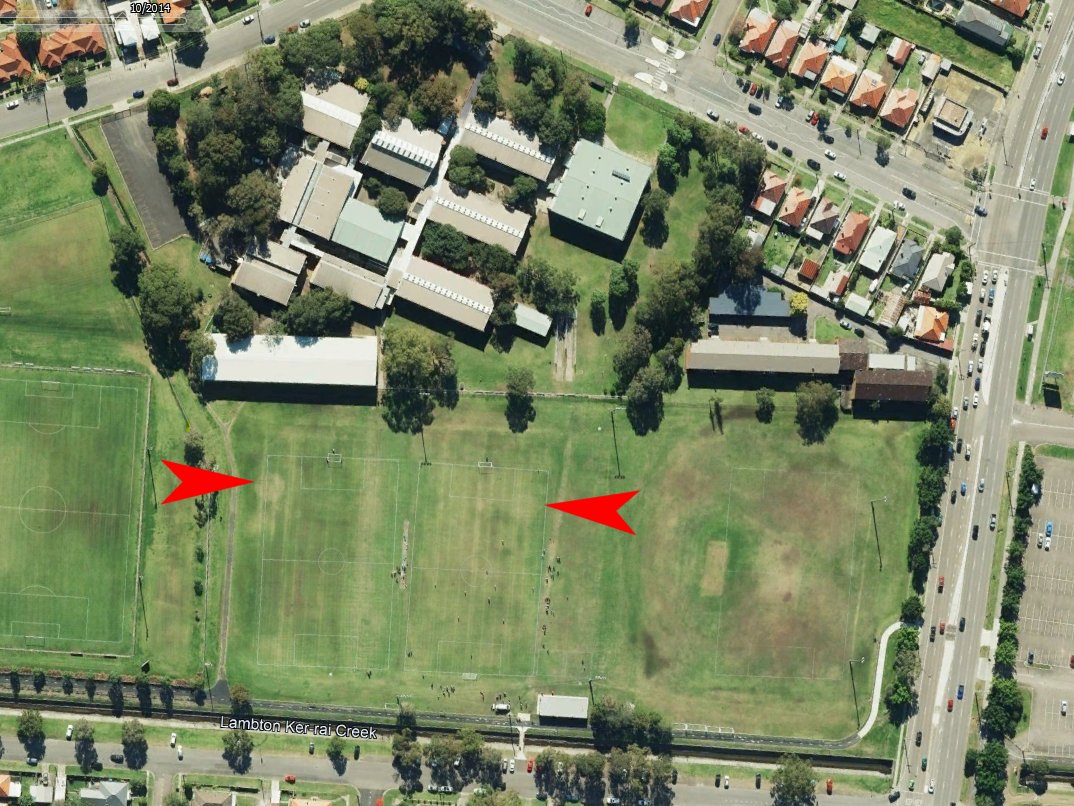
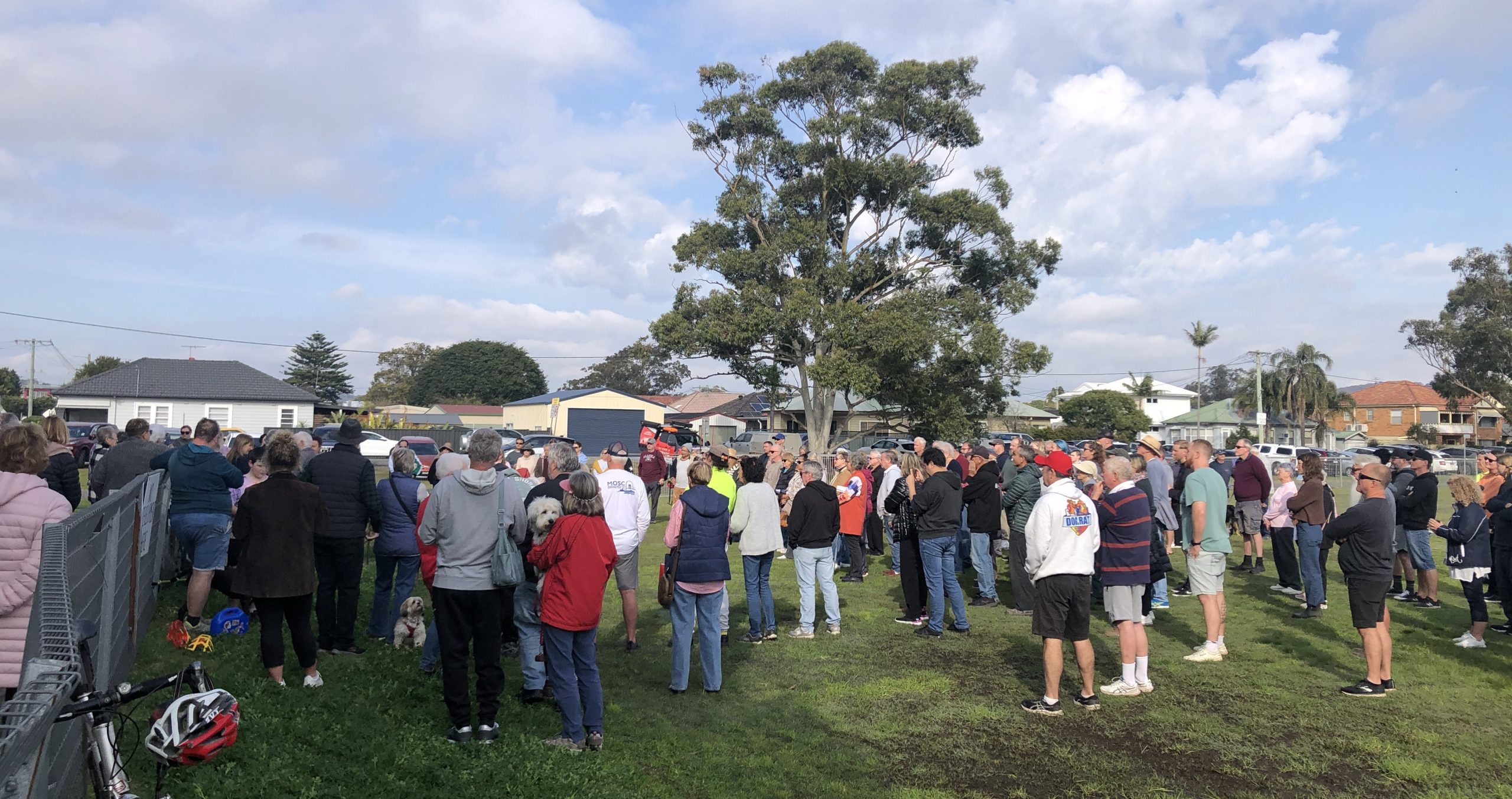
I was reading a newspaper article today about a public meeting protesting the impending loss of park land at the location of Wallarah and Blackley Ovals in New Lambton. One contributor to the meeting said …

A park of considerable dimensions was required in their midst. There was every probability that the population would increase, which made it all the more necessary that they should have all the parks they could get for recreation purposes.

Interestingly, this statement is not from 2024/2025 when the NSW State Government (in collusion with Newcastle Council) want to hand over much needed sporting fields for the construction of a basketball stadium. No, this is from a public meeting 126 years ago on 15 May 1899. Attendees at the meeting were railing against the state government’s plan to sell into private ownership, at bargain basement prices, large swathes of publicly owned land previously promised for a district park.

Fortunately for us now, the community back then kicked up such a fuss that within a couple of months the government revoked their plans for the sell off. The image below shows an old parish map that has the Homestead Selection Area 585 outlined in red. I have overlaid this into Google Earth then shaded in green the areas that are still green space or used for public recreation today. This amounts to 35 hectares of land that we would not have now if the residents of 1899 had not been vigilant, and actively protested the government’s intentions to flog off public land to the public’s detriment.

The old battle is with us anew.

Historical parish map showing the 1899 Homestead Selection Area 585 outlined in red, with areas still used for public recreation today shaded in green. Parish map from Historical Land Records Viewer.

Anniversary and Archive

This month marks 10 years since I started writing monthly local history articles for The Local. I initially submitted a one-off article and was somewhat surprised when Mark Brooker, the publisher, responded asking if I wanted to write a monthly column. At the time I thought I only had material for half dozen articles and so initially only committed to that number. Ten years on I’m up to article 116, and the ideas for articles keep accumulating.

The author in December 2014 (left) and December 2024 (right).

My writing about local history in the Lambton area began in the summer of 2014-2015 with a series of ‘then and now’ photographs published over the course of 16 days. To mark the ten years since the summer of 2024-2025 I have revisited each of the locations and taken another photo in the ‘then and now’ series.

Having written much local history content on this website over the last 10 years, the question of how to preserve this digital content in the long term was increasingly on my mind. However thanks to the recommendation of Ruth Cotton (noted community historian of the Hamilton area), my website has been added to the State Library of NSW Pandora archive of digital content.

Each year the library will store an archive of the local history content of my site (everything under the https://lachlanwetherall.com/then-and-now URL), so that when this site is no longer available, my content will still be accessible via the library archive.

Being added to the Pandora archive was a great honour, and a spur for me to re-organise my site to make sure that all the significant local history content is under the “/then-and-now” URL and can be reached via the That was then, This is now index page.

Microsoft’s AI tax

While preparing a household budget today for the next calendar year, I was somewhat shocked to discover that my Microsoft M365 subscription for next year was jumping from $109 to $159, an increase of nearly 50%. A bit of research showed that the price jump was due to the introduction of AI capabilities (branded as Copilot) in the suite of Office products. I have no use for these AI functions, and was somewhat miffed that I was going to be slugged for features I’m never going to use.

The good news is that it is possible to revert back to an M365 subscription without the AI, and avoid the inflated price. The process to do this is slightly non-obvious. You have to …

  1. Sign in to your Microsoft Account
  2. Go to the “Services & subscriptions” tab
  3. On the M365 subscription, click “Manage”
  4. Click the “Cancel subscription” link, which will then take you to page where you have the option to …
  5. Choose the “Microsoft 365 Personal Classic” subscription (with no AI)

Just to demonstrate how pathetically useless AI is, I asked Microsoft’s Copilot to “generate an image of an evil corporation sucking money from unsuspecting consumers”, and this is all I got. 🙁

Update, October 2025: I’m so pleased to see that the Australian Competition and Consumer Commission (ACCC) is now suing Microsoft over this objectionable deception.

Wallarah Oval basketball stadium submission period

The exhibition period for the proposed new basketball stadium on Wallarah and Blackley ovals is now open closed.

Submissions must be made by Monday 11 November 2024, at the NSW government planning portal, on the Hunter Indoor Sports Centre project page.

Update, 4 November 2024: I have completed my opposing submission on the project planning portal. In summary I have three principal objections:

  1. Loss of green space.
  2. Significant negative impacts on traffic and parking.
  3. Unfairness to existing users of the site.

You can read a PDF of my full submission.