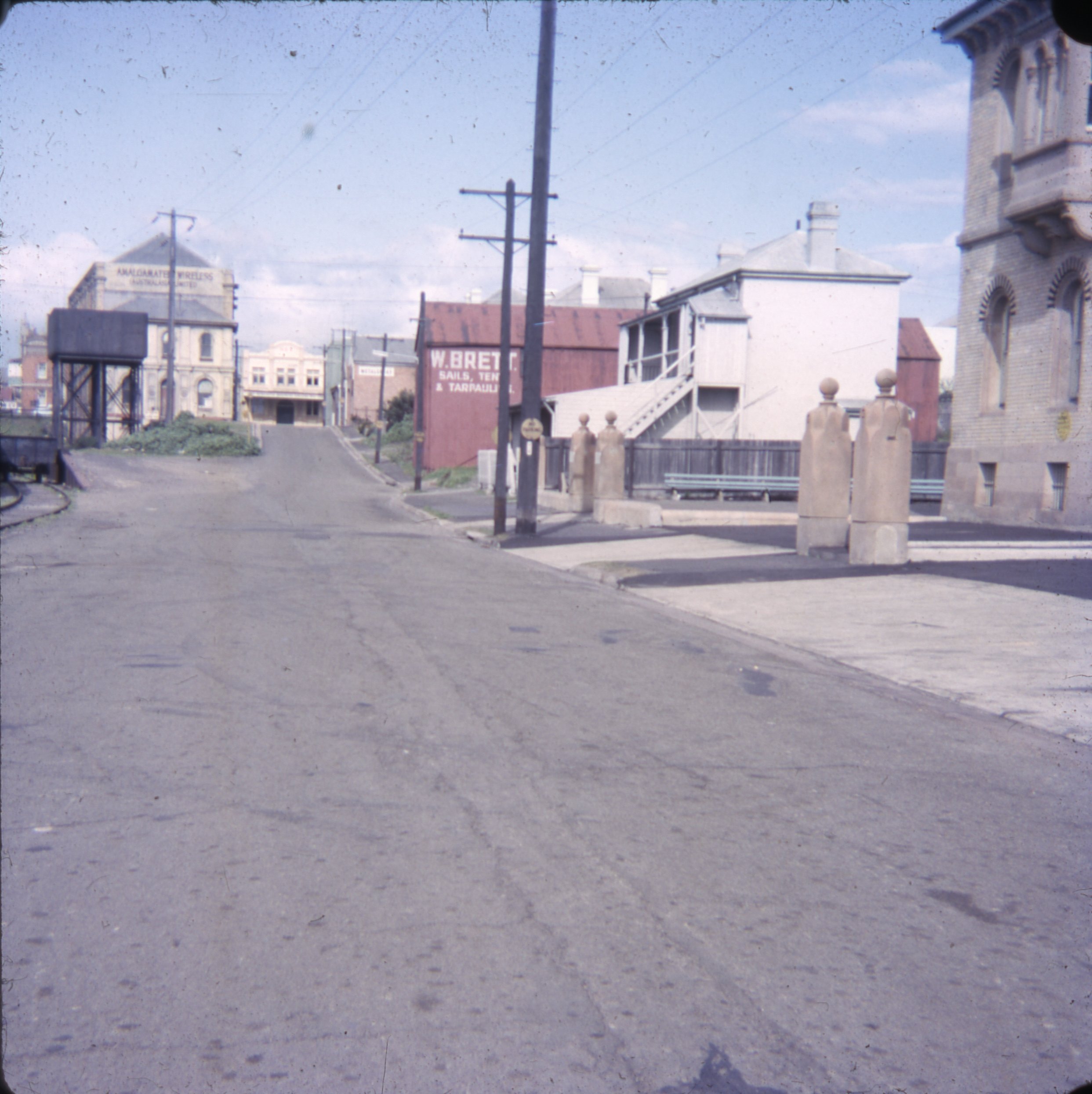
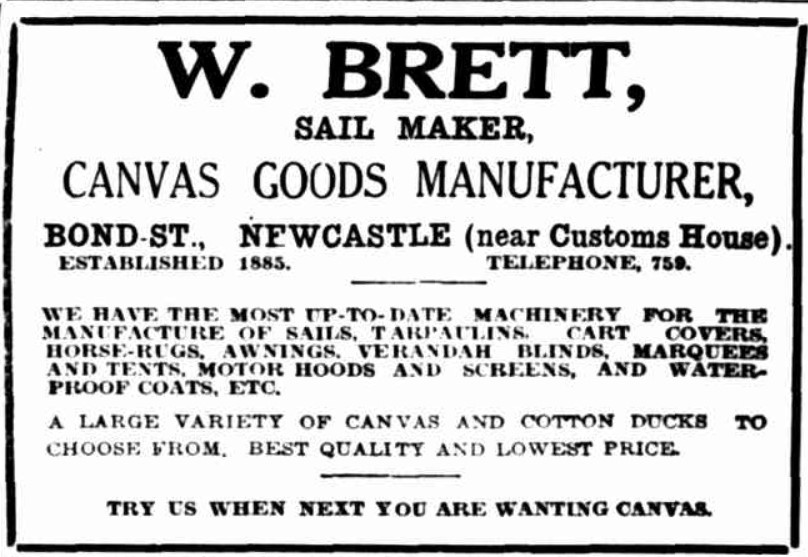
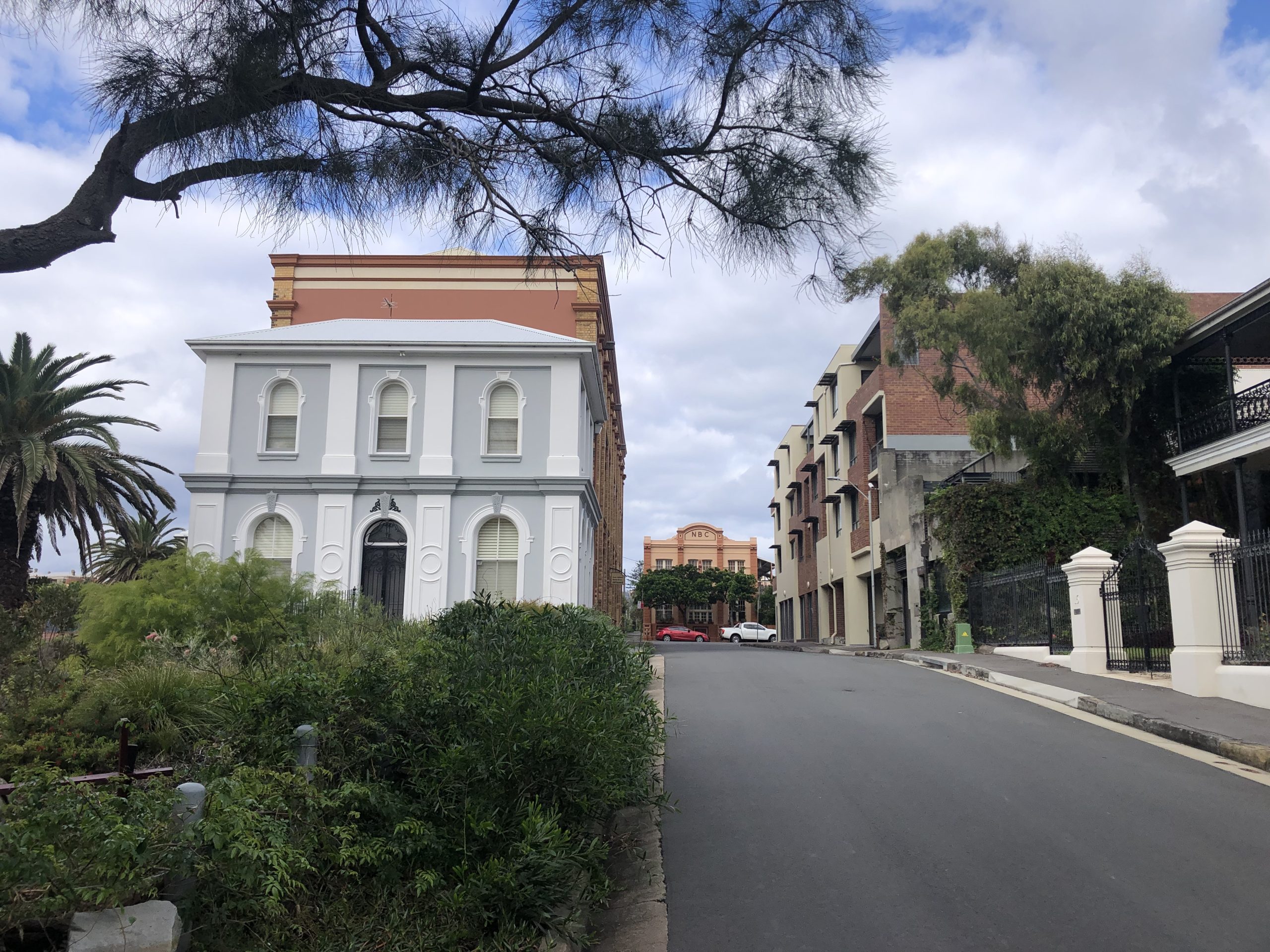
Researching the Zaara Street power station in Newcastle is complicated by the fact that there are three different spellings of the name.
Although the official name of the street now is “Zaara Street”, there are plenty of old maps and newspaper articles that refer to it as “Zara Street”.
To make matters worse, it seems that when the plans for the power station were being drawn up in Sydney, a spelling mistake was made and the official name for the power station became “Zarra Street” power station.
Curiously enough, the official spelling of Zara-street station is “Zarra-street” It is believed that in the days of extreme centralisation, when Newcastle was regarded in the metropolis as an unpleasant blot on an otherwise fair State some Sydney draughtsman drew up a plan for “Zarra-street” power station. The Railway Department has never changed the spelling.
Newcastle Morning Herald and Miners’ Advocate, 22 July 1939.
The first mention of the power house in the newspapers is on 5 November 1914 with the notification by the Railways Department of the appointment of Matthew Maher as an ash trimmer, and George Wheatley and Thomas Martin as firemen. On 24 March 1915 the Department advertised a tender for “the Supply of one 250 KVA Turbo Generator set”, to which they received six responses.
Whether one of these tenders was accepted is unclear, however a few months later on 20 November 1915 the department was advertising for the “SUPPLY AND ERECTION OF ONE 2500 KILOWATT TURBO ALTERNATOR”, for which 14 tenders were received.

In January 1917 it was announced that …
A new power-house is to be erected at Newcastle, and a commencement has been made with the preliminary work on a site adjoining the temporary power-house, near the pilot station. The object is to provide power for the new electric cranes, which have been erected on the basin wharfs, and the wheat elevator, which will be built shortly, as well as supplying additional power to the works now served by the present power-house. The new power-house will also provide current when the old steam tram service is converted into a modern electric system.
The Sydney Morning Herald, 25 January 1917.
In 1923 in preparation for the electrification of Newcastle’s tram network, the capacity of the power house was expanded with another two turbo-generators – one of 2500kW and another of 7500kW capacity.
In June 1936 another planned expansion of the power station was announced.
It is regarded as likely in Newcastle railway circles that the Zara-street power station will be extended to provide for extension of the electricity system from Dungog to Gloucester, and eventually to Taree. Recently a turbine weighing about 10 tons, was brought from England and installed at the Zara-street station to augment the supply of power. Notwithstanding this addition to the plant. It is believed that further installation will be required to serve the new area.
The Newcastle Sun, 12 June 1936.
In March 1937 a new steel chimney stack was being erected in October 1937 the newspaper reported that …
Extensions to Zara-street power-house, Newcastle, are proceeding rapidly. The duplication of the boiler-house equipment, which provides the steam power to drive the generators, is well in hand. Arrangements have been made for the installation of a further generating unit as soon as the new boiler-house is completed. The new generating unit will have approximately twice the capacity of the largest of the existing generators.
Newcastle Morning Herald and Miners’ Advocate, 6 October 1937.


In October 1938 the newspaper gave a detailed report on the progress of the extensions including a page of photos.
Big extensions of plant and building at the Railway Commissioners’ power station at Zara street, the most vital place in Newcastle, will cost nearly £350,000. It is expected that the new plant and buildings, made imperative by a tremendous increase in output in recent years, will be in operation by March next year.
Newcastle Morning Herald and Miners’ Advocate, 13 October 1938.
The extensions were completed by July 1939.


Zara-street powerhouse has again broken its power-output record. In the past week the power house has several times reached 70,000 kilowatts its highest achievement yet. A leading electrical engineer said last night: “A combination of favourable conditions enabled the record 70,000 kilowatts; the powerhouse plant was running well, and the quality of the coal was good.”
Newcastle Morning Herald and Miners’ Advocate, 15 June 1949.
In May 1952 the Government announced that the Electricity Commission will take over railway power stations in New South Wales including Zara Street station at Newcastle. Although the transfer was initially scheduled for 30 June 1952, the transfer eventually took place on 1 January 1953, ending 53 years of power generation by the Department of Railways in NSW.
The station continued to produce electricity until 1969, when it was left to stand idle. In 1973 the state suffered from a shortage of electrical generating capacity, and the Newcastle Morning Herald headline on 23 February 1973 stated “Zara power to be on stand-by.” A headline on 15 June 1973 stated “Zaara St. puts power into State System.” Another power crisis came in 1975 , and a headline on 8 January 1975 stated “Zaara Street power may flow again.” Mike Scanlon’s 2015 article on the power station indicates that the station did indeed fire up again in 1975, and this is the last year that the station appears to have produced electricity for the state grid.

A headline on 9 April 1976 stated “Power house demolition – end In sight for Zaara St”, and demolition of the power station commenced in September 1977. The main building was brought down with explosives in February 1978, and the 200 ton coal hopper was finally brought down in August 1978. (For details, see Louise Parker’s 1989 report on the Zarra Street Power Station.)

The area subsequently becoming part of the foreshore lawns, and some used for housing.

Street names on maps
Looking at maps throughout the ages, most have the street spelled “Zaara”, a few spelled “Zara”, and just one with the spelling “Zarra”.

The street name first appears on a map from 1844. Although there is no contemporary explanation for the origin of the name, it seems fairly certain that as “Zaara” is an alternate spelling of “Sahara”, that the street was named after the desert-like sand hills that occupied that location originally.


A perfect illustration of the confusion of the street’s name is a 1957 Shell Petroleum roadmap that has two different spellings on the same page.

Newspaper articles
| Article Date Event Date | Notes |
|---|---|
| 5 Nov 1914 | First mention of “Zarra Street Power House” in Trove. |
| 25 Jan 1917 | Announcement that "a new power-house is to be erected at Newcastle ... on a site adjoining the temporary power-house, near the pilot station." |
| 6 Jul 1918 | "An arrangement exists between the Newcastle City Council and the Railway Commissioners, whereby the latter will supply the council with current in bulk, to meet the requirements of the whole district, from the Zarra Street power-house, which has been designed for an output of 50,000 horsepower. " |
| 3 Dec 1920 | "One turbine which had been ordered four years ago to extend the Zara-street power station plant had not yet arrived. Some additional machinery was being installed and would be in operation by March next." |
| 29 Nov 1922 | Description of the Zara Street Power House, one year prior to the electric tram service beginning. |
| 16 May 1923 | "The largest of 64 packages of a turbo-generator, the dynamo, landed recently from the steamer Bendigo, for erection at the Zara-street Power House, is considered the heaviest load successfully lifted in the Newcastle Harbour. The dynamo weighed only ½cwt short of 33 tons. It was made by the British Thomson Houston Company, Limited, of Rugby, England. The dynamo is to be used in connection with the production of electric current to supply power for the Newcastle electric tramway system." |
| 29 Aug 1923 | "At the Zara-street power-house the installation of one 2,500 kilowatt turbo-alternator was completed during the year. One 7,500 kilowatt, 11,000 volt, 50 cycle turbo alternator has been delivered on the site, and will be installed during the next few months. Two Babcock and Wilcox water tube boilers, each with a heating surface of 8,237 square feet, have been installed." |
| 17 Dec 1923 | "The key of the whole system of electric traction on the Newcastle tramways is the Zara-street power-house, owned and operated by the Railway Commissioners … A permanent staff of 63 men is employed at the power-house." |
| 5 Jan 1927 | Tender for supply and erection of 7500kw turbo alternator. |
| 14 Feb 1934 | "The Zarra-street (Newcastle) Power House of the Railway Commissioners at present supplied electrical energy in bulk as far as Singleton. It was an efficient plant with adequate capacity for present and prospective requirements, and utilised cheap coal." |
| 12 Jun 1936 | Exapnsion of Zara Street power station required to provide for extension of supply area to Gloucester and Taree. |
| 25 Jul 1936 | "Bulk Electricity Supply for the Manning... for a considerable time past negotiations had been going on to see if it could be arranged to supply electricity in bulk from the Zarra Street Power Station, Newcastle. A transmission main has already been laid from that power station, through Maitland as far as Dungog and the later proposals have turned on the possibility of linking up Gloucester, Wingham and Taree." |
| 16 Mar 1937 | Erection of new steel chimney stack. |
| 6 Oct 1937 | "Extensions to Zara-street power-house, Newcastle, are proceeding rapidly. The duplication of the boiler-house equipment, which provides the steam power to drive the generators, is well in hand. Arrangements have been made for the installation of a further generating unit as soon as the new boiler-house is completed. The new generating unit will have approximately twice the capacity of the largest of the existing generators." |
| 9 Mar 1938 | "The Department of Railways invites tenders for coal crushing and screening plant for Zarra Street Power Station." |
| 24 Jun 1938 | "It is recommended that additional supplies for Newcastle and surrounding districts be provided by increasing the capacity of the Zarra-street power station at Newcastle." |
| 9 Jul 1938 | Laying of 11,000 volt cables between the Railway Department's Zara Street power station and Newcastle Council's Sydney Street power station. |
| 13 Oct 1938 | Photos of the Zara Street power station extensions. |
| 13 Oct 1938 | Detailed description of extensions at Zara Street power station currently underway. |
| 19 Oct 1938 | "Extensions and additions estimated at £350,000 are to be made to both the building and plant at the Zarra Street Power Station, Newcastle. The additions will include a boiler-house, pump-house and new offices for the administrative staff. New boilers, pumps and heaters are also to be installed." |
| 7 Mar 1939 | "Newcastle has one large power station supplying the whole of its requirements domestic and industrial and that is the Zarra Street plant owned by the Railway Department. This Zarra Street plant is vulnerable because it is situated immediately behind Fort Scratchley and during an attack upon these forts the power station supplying heavy war industries is certain to be demolished." |
| 22 Jul 1939 | Report on the Zara Street power station at the conclusion of major extensions. Includes a note about the variant spelling of the station as "Zarra Street" station. |
| 8 Jan 1941 | "Permission for the linking of the power stations between St. Leonards (Sydney) and Zarra St. (Newcastle) on a 66,000 voltage has been granted by the Federal Government. The scheme is estimated to cost approximately £126,000, and will complete, the inter-linking of the electricity generating station in the metropolitan, Newcastle, Port Kembla, and Lithgow areas." |
| 24 Jul 1943 | "Department of Railways, Electrical Superintendent, Newcastle, wrote concerning rationing of electricity within the Northern area. Owing to increasing demand for electrical energy from Zarra street and associated power stations over recent months, Newcastle council's load has been 'opened off' without warning due to plant failures at Zarra street." |
| 27 Jul 1945 | "Skill was displayed by the drivers of a huge lorry float to transport a 21-ton condenser of a 15,000K.W. turbo-alternator unit from Sydney to Zara-street powerhouse." |
| 23 Mar 1946 | Erection of new chimney at Zaara Street power station. |
| 15 Jun 1949 | Record output of 70,000 kilowatts at Zara Street powerhouse. |
| 12 May 1952 | "The Electricity Commission will take over railway power stations in New South Wales from June 30. The stations affected are at Zara-street, Newcastle, White Bay, Ultimo, and Lithgow." [Note: transfer did not take place until 1 January 1953.] |
| 31 Dec 1952 1 Jan 1953 | "To-morrow the electricity generating stations and transmission system operated by the Department of Railways [including Zara Street power station] pass to the control of the Electricity Commission of New South Wales. About 1600 railway employees are involved in the transfer." |